
Every builder expects inspections.
Every builder expects punch lists.
Every builder expects some level of project coordination.
What most teams don’t expect is how much schedule pressure can be created by inspection delays and rework during the busiest months of the construction season.
A failed inspection isn’t just an inspection problem.
A rework item isn’t just a rework problem.
Both have a tendency to create ripple effects that impact schedules, labor coordination, and project momentum.
During the summer construction season, those ripple effects become even more difficult to absorb.
The direct cost of rework is easy to identify.
Additional labor.
Additional materials.
Additional supervision.
The indirect costs are often much larger.
When work must be revisited, crews are pulled from other tasks.
Schedules are adjusted.
Inspections are rescheduled.
Subcontractors are forced to coordinate around changing priorities.
The longer these adjustments continue, the more difficult it becomes to maintain schedule stability.
Many projects don’t lose momentum because of major failures.
They lose momentum because of a collection of smaller issues that repeatedly require correction.
Construction schedules depend on progress.
Progress often depends on approvals.
When inspections are delayed or corrections are required, work can slow dramatically.
Subsequent activities may be unable to proceed.
Trades waiting on access are forced to adjust their schedules.
Project teams spend time managing logistics rather than moving construction forward.
The challenge becomes even greater during peak construction season when inspection departments are handling increased workloads and project schedules have less flexibility.
What begins as a minor issue can quickly impact multiple trades and project milestones.
Every installation step introduces another opportunity for something to be missed.
Every trade handoff introduces another opportunity for miscommunication.
Every coordination point creates another potential bottleneck.
This doesn’t mean complex systems are inherently bad.
It means complex systems require more coordination, more oversight, and more opportunities for everything to go exactly as planned.
In the field, perfect execution is difficult to maintain.
Especially when labor resources are stretched and schedules are compressed.
That is why builders increasingly focus on reducing unnecessary complexity during preconstruction.
One of the most effective ways to reduce rework exposure is to simplify the process itself.
When systems require fewer installation steps, fewer trade handoffs, and fewer coordination points, there are fewer opportunities for mistakes to occur.
That can lead to:
Fewer inspection corrections
Fewer scope gaps between trades
Less schedule disruption
Reduced labor inefficiency
More predictable project outcomes
The goal isn’t simply to work faster.
The goal is to reduce opportunities for disruption before they occur.
For teams evaluating different wall assembly approaches, the Wall Assembly Selector Checklist can help identify systems that reduce labor dependency, coordination challenges, and installation complexity.
Many schedule issues that appear in the field actually begin during planning.
Unclear responsibilities.
Complicated sequencing.
Too many dependencies.
Insufficient coordination between trades.
These challenges frequently go unnoticed until work is already underway.
By then, the cost of correcting them is significantly higher.
The most successful projects often identify these risks before crews arrive on site.
Planning tools such as the Summer Build Risk Checklist help teams evaluate common schedule risks, inspection bottlenecks, labor dependencies, and coordination challenges before they begin impacting project performance.
Inspection delays rarely affect only one activity.
A delayed approval may impact:
Trade scheduling
Material deliveries
Dry-in timing
Labor allocation
Owner expectations
Project profitability
The effects compound quickly.
The further a project progresses without resolving bottlenecks, the more difficult schedule recovery becomes.
This is one reason builders increasingly evaluate systems not only for performance, but also for constructability.
A system that is easier to coordinate is often easier to inspect, easier to manage, and easier to keep on schedule.
No construction project is completely free of rework.
No project avoids every inspection challenge.
The objective is not perfection.
The objective is predictability.
Projects with fewer opportunities for mistakes, fewer coordination challenges, and fewer dependencies generally create more reliable schedules.
Builders who focus on reducing complexity early often spend less time solving problems later.
Different builders approach this challenge in different ways. The Builder Types guide explores how various builder profiles manage risk, coordination, scheduling, and project execution.
The fastest way to reduce rework and inspection delays is not necessarily adding more oversight.
It’s reducing the number of opportunities for problems to occur in the first place.
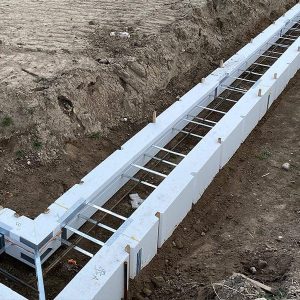
FasTrax footing forms are a game-changer in the construction industry. We’ve developed forms that can…
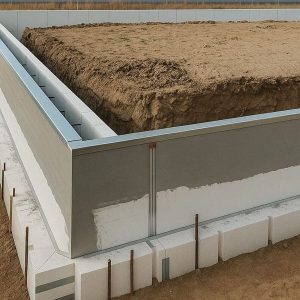
Our innovative range tackles insulation challenges with reliability, energy efficiency, and cost-effectiveness…
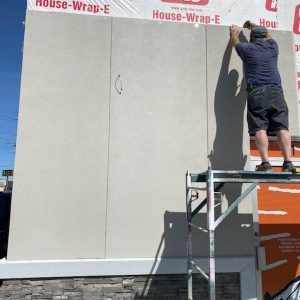
Transform your home with SnapTight Products Insulated Siding Panels, featuring an additional R-value…
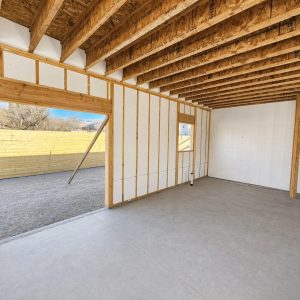
The DONE Wall is a revolutionary new insulated wall system that simplifies the construction process and makes…