
Summer is often viewed as the ideal time to build.
Longer daylight hours and favorable weather conditions create opportunities to keep projects moving and maintain schedule momentum.
But summer introduces a challenge that many project teams underestimate.
Heat.
While weather delays are easy to recognize, heat-related productivity loss often develops gradually and becomes visible only after schedules begin slipping.
Crews slow down.
Tasks take longer.
Coordination becomes more difficult.
Schedules become harder to maintain.
The result is a form of schedule pressure that can be difficult to identify until it has already impacted project performance.
Construction work is physically demanding under normal conditions.
As temperatures increase, so does the strain placed on workers.
More frequent breaks become necessary.
Hydration becomes critical.
Fatigue increases throughout the day.
Tasks that may take a predictable amount of time during moderate temperatures often require more time and effort during extreme heat.
This does not mean crews are working less effectively.
It means they are working under more difficult conditions.
The impact may seem small on a single day.
Across weeks or months of summer construction, those small reductions in productivity can have a meaningful effect on schedules.
Not every part of a project experiences heat-related impacts equally.
Activities that sit directly on the critical path often feel the pressure first.
When productivity slows during critical construction phases, downstream trades can be affected as well.
A delayed activity may create:
Schedule compression
Trade stacking
Labor coordination challenges
Inspection timing issues
Dry-in delays
The longer these impacts continue, the harder they become to recover from.
This is one reason builders increasingly evaluate project risks before summer construction reaches peak activity.
The Summer Build Risk Checklist helps project teams identify labor, sequencing, weather, and productivity risks that can impact schedule performance during the busiest months of the year.
Summer heat rarely creates entirely new problems.
More often, it exposes existing weaknesses in the construction process.
A highly coordinated process may continue moving forward with minimal disruption.
A process that already contains scheduling bottlenecks or labor dependencies can become much more vulnerable.
Heat makes recovery harder.
Delays become more difficult to absorb.
Schedule flexibility disappears.
Activities that depend on perfect timing become increasingly difficult to manage.
This is especially true when multiple trades must coordinate around a series of sequential installation steps.
When projects begin losing momentum, the natural response is often to add labor.
Sometimes that works.
Sometimes it creates new challenges.
Additional crews require additional coordination.
Work areas become more congested.
Supervision requirements increase.
Trade interactions become more complicated.
Instead of improving productivity, projects can experience additional friction.
The most successful teams often focus first on reducing unnecessary complexity rather than simply adding more labor.
Builders cannot control the weather.
They can control how much their schedules depend on perfect conditions.
Processes that require fewer installation steps, fewer trade handoffs, and fewer labor-intensive activities generally create more predictable outcomes.
Reducing complexity helps projects maintain momentum when labor availability, weather conditions, and productivity challenges begin creating pressure.
For builders evaluating ways to improve schedule reliability, the Wall Assembly Selector Checklist provides a practical framework for comparing assembly approaches based on labor requirements, sequencing, and installation complexity.
Most project teams account for weather delays.
Few account for the cumulative impact of reduced productivity.
Heat-related inefficiencies often show up as:
Longer installation durations
Additional labor hours
Increased schedule pressure
Delayed inspections
Extended exposure periods
Greater coordination requirements
Because these impacts occur gradually, they are often accepted as normal summer conditions.
In reality, they can significantly influence overall project performance.
Successful summer projects rarely happen by accident.
They are the result of proactive planning, realistic scheduling, and identifying risks before they become problems.
Builders who understand where productivity challenges exist can make better decisions about sequencing, labor allocation, and project execution.
Many builders approach these challenges differently depending on their priorities and project types. The Builder Types guide explores how different builders manage schedule pressure, risk, coordination, and project performance.
Summer heat is unavoidable.
The schedule impacts that follow don’t have to be.
The more risk that can be removed from the process before construction begins, the easier it becomes to maintain momentum through the most demanding months of the year.
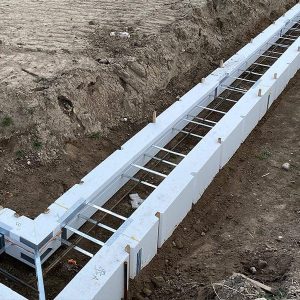
FasTrax footing forms are a game-changer in the construction industry. We’ve developed forms that can…
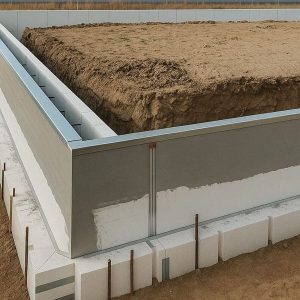
Our innovative range tackles insulation challenges with reliability, energy efficiency, and cost-effectiveness…
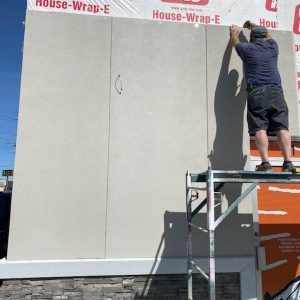
Transform your home with SnapTight Products Insulated Siding Panels, featuring an additional R-value…
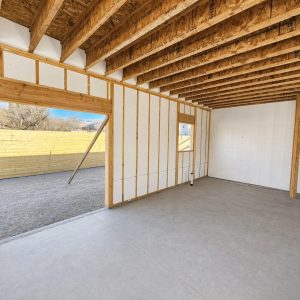
The DONE Wall is a revolutionary new insulated wall system that simplifies the construction process and makes…