
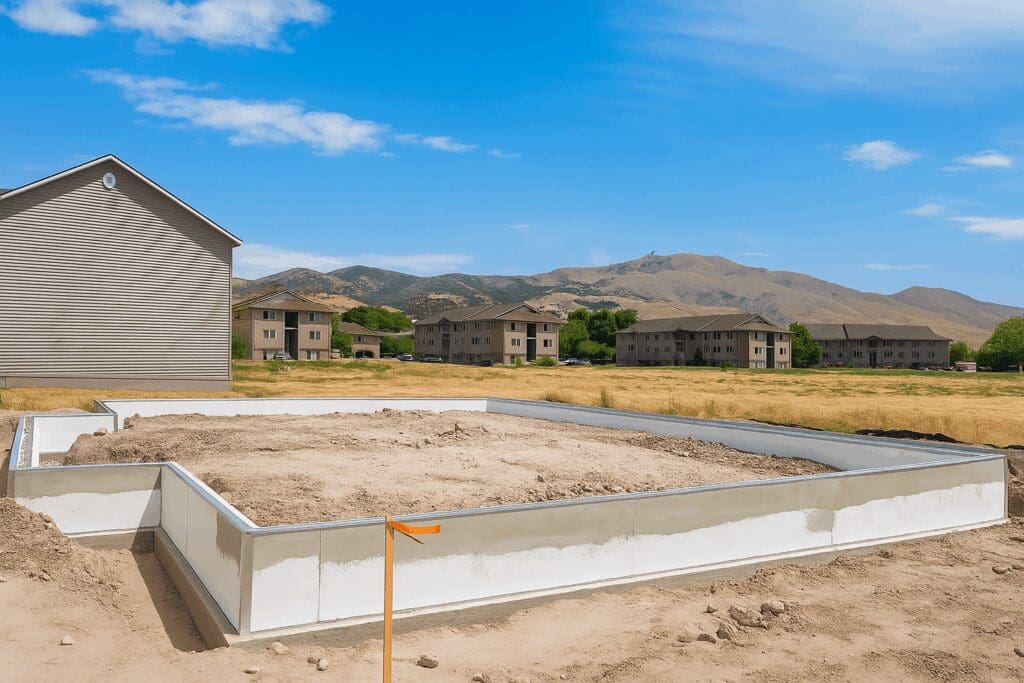
The building industry is at a crossroads. Rising labor costs, shrinking skilled‐trade pools, stricter energy codes, mounting client expectations for quality and speed: all of these pressures are converging at once. For residential and commercial builders alike, sticking with “business as usual” construction methods is increasingly risky.
That’s where integrated insulated building systems come in. These systems—combining foundation forms, insulated wall systems, and high‐performance building envelopes—are reshaping how structures go up. Builders who adopt them gain measurable advantages. And investors looking at the sector see a market ripe for disruption.
In 2025, the skilled construction workforce remains severely constrained. According to the Associated General Contractors of America (AGC) survey, 92 % of construction firms said they’re having a hard time finding qualified workers, and 45 % reported that labor shortages are causing project delays. Associated General Contractors Meanwhile, the Home Builders Institute (HBI) notes the labor shortage in home‑building alone is responsible for an estimated $10.8 billion per year in lost production—comprised of higher carrying costs and fewer homes delivered. National Association of Home Builders
For builders, this means one simple truth: the fewer people you need on the jobsite, the better your control, margin and schedule.
Beyond labor, builders face intense pressure to complete faster. Shorter construction timelines reduce overhead, expedite cash flow, and protect margin. Yet conventional methods—excavate, form, pour, frame, insulate, finish—are still heavily sequential, dependent on multiple trades, and vulnerable to delays. Integrated insulated systems offer a compelling re‑engineering of that timeline.
Building codes are tightening. Developers and owners expect high‐performance envelopes, reduced thermal bridging, airtight construction, and insulation values higher than ever. With homes and commercial buildings alike being rated for energy efficiency, any builder who must retrofit or patch later is losing margin and risk. Systems that incorporate insulation and structure together reduce that burden.
Instead of treating foundation, wall framing, insulation and exterior finish as separate trades, an integrated system addresses multiple elements simultaneously: insulated foundations (or forms), structural walls with continuous insulation, and often pre‐finished exterior surfaces. Builders benefit from fewer handoffs, fewer trades, less coordination, and therefore fewer delays.
With fewer steps and fewer people required on each task, integrated systems reduce labor hours per building. Critical when you can’t find enough trade talent. The math is compelling: if a builder normally requires X crew‐days for standard build, switching to a system that reduces crew size or sequencing complexity may enable them to complete more units annually without increasing overhead. That incremental throughput is a margin lever few builders ignore.
Integrated systems tend to improve thermal continuity, reduce air infiltration and minimize thermal bridging—all elements tied to durable, high‐performance construction. For builders, that means fewer change orders, fewer warranty calls and better reputation among buyers. A tighter envelope means less chance of insulation gaps, hidden defects, or exterior finish failures.
When a builder can say “we build faster, more energy efficient and with fewer trades,” it resonates in bids and in buyer conversations. In competitive markets—especially multi‑unit or mixed use—time to occupancy and operational cost matter more than they often did. Integrated systems position a builder to offer those benefits in a credible way.
The global building thermal insulation market alone was estimated at US $ 26.9 billion in 2024, and is projected to reach US $ 37.8 billion by 2030, growing at a CAGR of approximately 5.9% from 2025 to 2030. Grand View Research+1 In North America, the building thermal insulation market size was estimated at US $ 8.52 billion in 2023, and is expected to grow at a CAGR of 4.7% from 2024 to 2030. Grand View Research Meanwhile, the structural insulated panels (SIP) market is projected to grow from about US $ 481.15 million in 2024 to US $ 706.76 million by 2033, at a CAGR of ~4.15%. IMARC Group These stats show a steadily expanding addressable market. The key is—not just more insulation—but building systems that integrate structure + insulation + finish, where value migrates upward.
Investors like to place capital where structural forces are aligned. Here those forces include:
For a company like SnapTight (offering integrated foundation + wall insulated systems), the differentiator is twofold:
From an investment perspective, that means potential for repeat business, stronger builder loyalty and defensible market share.
If you’re a builder today, adopting integrated insulated building systems is not just about doing something new—it’s about gaining a strategic advantage. Fewer crews, faster builds, higher quality envelopes, greater margin control—all matter in tight markets with rising costs. Delay a decision and you risk being out‐bid, out‐paced or margin‐eroded.
The choice is clear: adapt your envelope system or risk falling behind.
If you’re looking at the building‑materials or construction‑tech sector, companies that solve core builder pain points (labor, speed, quality, code compliance) are rare. The insulated shell space—particularly where systems combine structure and insulation—stands out as an under‑penetrated segment with large upside. A company like SnapTight, offering this dual benefit, is positioned to capture share.
We are in a “sweet spot” of market timing. Labor shortages, energy code tightening and construction pressure are all aligned to accelerate adoption of integrated systems. The longer a builder waits, the more cost, schedule or risk they absorb. For investors, the early movers in this space gain disproportionate benefit.
The smartest builders are not waiting. They’re switching to insulated building systems because the benefits go beyond product—they transform how a building goes up. Faster timelines, fewer crews, better quality, fewer trade dependencies. For investors, the growth charts, regulatory tailwinds and market drivers all point to a major shift. Companies that enable builders to win more jobs, reduce risk and build smarter are going to be the breakout performers.
If you want to stay ahead, it’s time to align your build system strategy with the next wave of construction technology. Whether you build houses, commercial projects or multi‑unit structures, integrated insulated building systems aren’t just an option—they’re the future.
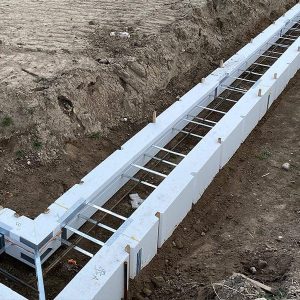
FasTrax footing forms are a game-changer in the construction industry. We’ve developed forms that can…
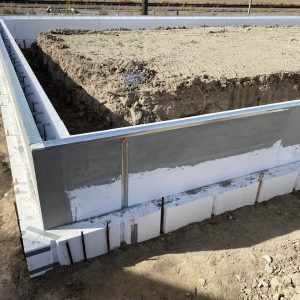
Our innovative range tackles insulation challenges with reliability, energy efficiency, and cost-effectiveness…
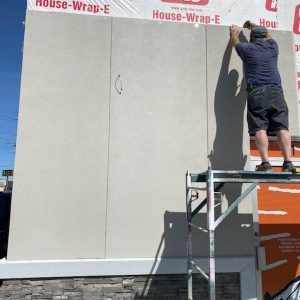
Transform your home with SnapTight Products Insulated Siding Panels, featuring an additional R-value…
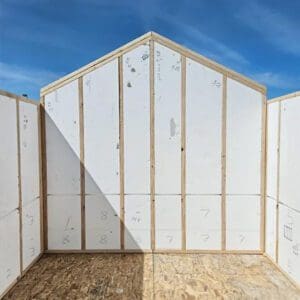
The DONE Wall is a revolutionary new insulated wall system that simplifies the construction process and makes…